The Bible narrates that in the centuries after ancient Israelites entered the land of Israel, many if not all of the people turned their back on the God of their Fathers for long periods of times, going back on worshiping idols, creating altars and adopting pagan practices. New research conducted by Tel Aviv University and Israel Antiquities Authority archaeologists has shed new light on these cult practices, thanks to new excavations conducted in 2019 at the site of a monumental temple uncovered in Tel Moẓa in 2012. Located about 6 kilometers outside Jerusalem, the site has been identified with the city of Moza, mentioned in the biblical book of Joshua as an administrative center and a royal granary within the territory of the tribe of Benjamin. The Moẓa Expedition Project, whose findings were published in the January/February 2020 issue of Biblical Archaeology Review, had the goal to deepen the understanding regarding both the temple complex built around late 10th-early 9th centuries BCE bearing resemblance to the Jerusalem Temple and a more ancient structure that has been only partially revealed. “Could a monumental temple really exist in the heart of Judah, outside Jerusalem? Did Jerusalem know about it?” wrote co-authors of the article PhD student Shua Kisilevitz and professor Oded Lipschits. “If so, could this other temple possibly have been part of the Judahite administrative system? The bible details the religious reforms of King Hezekiah and King Josiah, who consolidated worship practices to Solomon’s Temple in Jerusalem, and eliminated cultic activity beyond its boundaries.
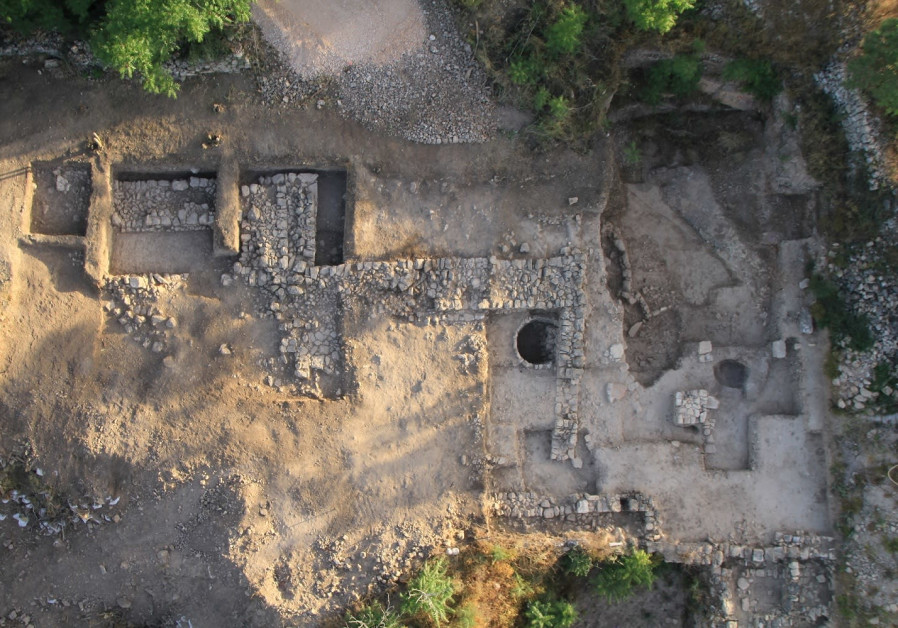 Aerial photo of the temple at the end of the 2013 excavation. Credit: SkyView, Israel Antiquities Authority
“In the third year of King Hoshea son of Elah of Israel, Hezekiah son of King Ahaz of Judah became king. (...) He did what was pleasing to the Lord, just as his father David had done. He abolished the shrines and smashed the pillars and cut down the sacred post,” reads II Kings 18, 1-4 (translation by Sefaria.org).
The book goes on to describe that after the death of Hezekiah, prohibited cult practices were revived - before being abolished again - as his successor Manasseh “did what was displeasing to the LORD, following the abhorrent practices of the nations that the Lord had dispossessed before the Israelites. He rebuilt the shrines that his father Hezekiah had destroyed; he erected altars for Baal and made a sacred post.” (II Kings 21, 2-3).
The archaeologists explained their research clearly points out “that the temple at Moẓa conformed to ancient Near Eastern religious conventions and traditions and biblical depictions of cult places throughout the land. It has become clear that temples such as the one at Moẓa not only could but also must have existed throughout most of the Iron II period as part of the official, royally sanctioned religious construct.”
Among other things, numerous cultic artefacts were unearthed at the site, including human and animal shaped figurines modeled after lions, horses and sphinxes, as well as architectural remains such as an altar and a pit filled with animal bones – mostly sheep and goats, ashes and pottery sherds, as explained in a TAU press release.
“Our discoveries thus far have fundamentally changed the way we understand the religious practices of Judahites,” stated Lipschits.
According to the article, Moza likely became a spiritual center in light of its economic significance.
“The link between religion and economy has been well established in the ancient Near East, including at the Jerusalem Temple. But the economic component of ancient temples is more than just the collection of taxes, safeguarding of wealth, and distribution of aid. A link between economic subsistence, production, and the development of religious elites during the Iron IIA period has been suggested at several sites,” reads the article.
As pointed out in the study though, many questions remain open.
“All we know so far is that when it was constructed, the Moza temple was likely the undertaking of a local group, but by the Iron IIB period, it was clearly under Judahite rule and must therefore have been royally sanctioned by the realm. The rest remains to be discovered,” the archaeologists wrote in their conclusion.
Perhaps some answers will emerge from the next round of excavation next spring, which will see the participation of staff and students from Tel Aviv University, Charles University (Prague) in the Czech Republic, Universität Osnabrück in Germany and UCLA in the United States.
Aerial photo of the temple at the end of the 2013 excavation. Credit: SkyView, Israel Antiquities Authority
“In the third year of King Hoshea son of Elah of Israel, Hezekiah son of King Ahaz of Judah became king. (...) He did what was pleasing to the Lord, just as his father David had done. He abolished the shrines and smashed the pillars and cut down the sacred post,” reads II Kings 18, 1-4 (translation by Sefaria.org).
The book goes on to describe that after the death of Hezekiah, prohibited cult practices were revived - before being abolished again - as his successor Manasseh “did what was displeasing to the LORD, following the abhorrent practices of the nations that the Lord had dispossessed before the Israelites. He rebuilt the shrines that his father Hezekiah had destroyed; he erected altars for Baal and made a sacred post.” (II Kings 21, 2-3).
The archaeologists explained their research clearly points out “that the temple at Moẓa conformed to ancient Near Eastern religious conventions and traditions and biblical depictions of cult places throughout the land. It has become clear that temples such as the one at Moẓa not only could but also must have existed throughout most of the Iron II period as part of the official, royally sanctioned religious construct.”
Among other things, numerous cultic artefacts were unearthed at the site, including human and animal shaped figurines modeled after lions, horses and sphinxes, as well as architectural remains such as an altar and a pit filled with animal bones – mostly sheep and goats, ashes and pottery sherds, as explained in a TAU press release.
“Our discoveries thus far have fundamentally changed the way we understand the religious practices of Judahites,” stated Lipschits.
According to the article, Moza likely became a spiritual center in light of its economic significance.
“The link between religion and economy has been well established in the ancient Near East, including at the Jerusalem Temple. But the economic component of ancient temples is more than just the collection of taxes, safeguarding of wealth, and distribution of aid. A link between economic subsistence, production, and the development of religious elites during the Iron IIA period has been suggested at several sites,” reads the article.
As pointed out in the study though, many questions remain open.
“All we know so far is that when it was constructed, the Moza temple was likely the undertaking of a local group, but by the Iron IIB period, it was clearly under Judahite rule and must therefore have been royally sanctioned by the realm. The rest remains to be discovered,” the archaeologists wrote in their conclusion.
Perhaps some answers will emerge from the next round of excavation next spring, which will see the participation of staff and students from Tel Aviv University, Charles University (Prague) in the Czech Republic, Universität Osnabrück in Germany and UCLA in the United States.
2020-02-03 13:01:00Z
https://www.jpost.com/Israel-News/Biblical-Israelites-maintained-cult-practice-in-temples-outside-Jerusalem-616357
Read Next >>>>
Bagikan Berita Ini


0 Response to "Biblical Israelites maintained cult practice in temples outside Jerusalem - The Jerusalem Post"
Post a Comment